
In 2024, The Global Economy reported around one-third of Ireland’s population live outside major urban centres — a clear sign that for many, space, tranquillity and community still matter. At the same time, Census 2022 data from Ireland’s Central Statistics Office showed that 265,098 residents moved home within the State in the year before the census, and 29% of them moved to a different county.
Together, those figures suggest something deeper than people simply changing address. They point to a quiet re-thinking of what “home” should offer: more space, more calm, and a better balance between everyday convenience and quality of life. For many households, that often means looking beyond city and inner-suburban living towards more rural or semi-rural locations.
But “moving to the country” can mean many different things: from a one-off house down a narrow lane to a home within a managed estate. Each comes with its own set of trade-offs.
Why Rural Living Appeals to So Many Today
For a growing number of families, couples and retirees, the attraction of a more rural setting is straightforward: everyday life feels more liveable. In practical terms, that often comes down to:
● More space, inside and out. Larger homes and gardens, room for children to play, space for a home office, and less sense of being “on top” of neighbours.
● A quieter daily rhythm. Less traffic and noise, fewer crowds, and a closer connection to nature, which can make working from home, raising a family or simply unwinding after work feel easier.
● Better perceived value. In many parts of the country, buyers feel they can secure more house and garden for their money than in city-centre locations, without giving up too much in terms of access to work and amenities.
● Lifestyle and wellbeing. Ready access to walks, sport and fresh air; a sense of living at a gentler pace; more security or privacy; and a feeling that home life is not dominated by the pressures of the city.
For many, those factors sit at the heart of the decision to look beyond purely urban options when planning a forever home.
The Trade-Offs of Going Fully Rural
A traditional rural move of a standalone property down a country road is not the right fit for everyone. Alongside its attractions, it can bring challenges that matter in day-to-day life:
● Commute and connectivity. Journeys to work, school or the airport can be longer and less predictable. Public transport options may be limited, making a car essential for most trips.
● Access to amenities. Everyday needs – groceries, childcare, healthcare, sports clubs – can involve more planning, especially for families with busy schedules.
● Maintenance and security. Driveways, boundaries, entrances and security typically fall entirely on the individual homeowner, both in terms of cost and effort.
● Potential isolation. With neighbours further apart and fewer shared spaces, some people find it harder to build the sense of community they hoped rural life would bring.
For households who want more space and calm, but are wary of these drawbacks, the idea of a purely rural home can feel like too big a leap.
Where Estate Living Fits In
Estate living sits between city-adjacent suburbs and fully rural locations. It aims to keep the space, greenery and quieter pace that draw people out of the city, while addressing many of the practical concerns.
In a well-planned rural estate, residents can typically expect:
● Space and greenery, with a designed layout. Homes are arranged to make the most of views, light and privacy, alongside landscaped communal areas and established trees, rather than ad-hoc development.
● Security and clear boundaries. Gated entrances or controlled access points, defined estate boundaries and thought-through lighting and sightlines, providing everyday peace of mind.
● Shared stewardship. Common areas, planting and key infrastructure are managed, helping to keep the estate looking and feeling well cared for over time, without each resident carrying the full burden alone.
● A built-in sense of community. Neighbours who have made similar long-term decisions, and shared spaces that encourage everyday interaction. Think: walking routes, green areas, clubhouse or café spaces where available.
● Convenience that typical rural homes can’t match. Proximity to motorway links, a well-serviced town and public transport, so residents can balance countryside calm with realistic access to work, school and the wider world.
For many buyers, this middle ground offers a more practical way to embrace rural living, especially when work, school and travel commitments still point towards Dublin or other urban centres.
How Loughmore Wood Brings This to Life
Within this context, Loughmore Wood on the Killeen Castle Estate represents a particular expression of rural estate living.
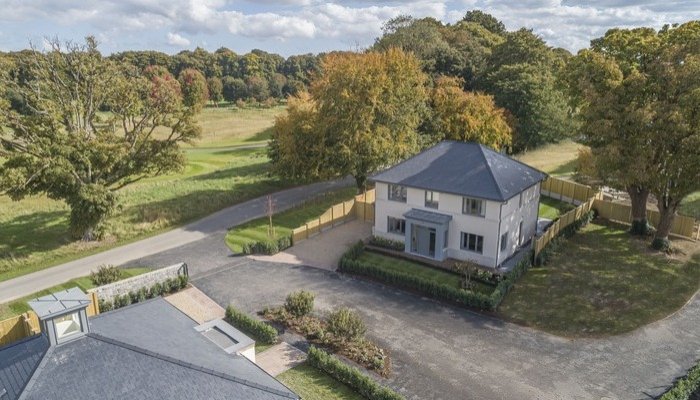
● A 600-acre historic estate. The fully restored castle, mature woodland, rolling parkland and Jack Nicklaus Signature golf course found on the Killeen Castle Estate provides a setting with a genuine sense of heritage and permanence.
● Choice of home or serviced site. At Loughmore Wood, A-rated, high-spec family homes are designed for modern living, while fully serviced residential sites offer the opportunity to create a substantial four- or five-bedroom home to your own brief, within agreed design parameters.
● Countryside calm, city convenience. The estate is minutes from Dunshaughlin, with its schools, shops and community amenities, and has straightforward access to the M3, M50 and Dublin City Centre, along with Dublin Airport. It’s a setting that supports commuting and travel, without sacrificing day-to-day calm.
● Security and peace of mind. As a gated estate with controlled access and a clearly defined demesne, Killeen Castle offers residents an added layer of reassurance – particularly valued by families and those planning for later life.
● A home for different chapters of life. No matter your desire for rural estate living, the combination of heritage, space and long-term stewardship is designed to support a true forever home for all buyers.
Weighing Your Options
If you find yourself drawn to the idea of more space, more calm and a stronger sense of place, but you don’t want to give up the practicalities that daily life demands, rural estate living may be worth exploring.
Loughmore Wood brings together countryside surroundings, historic character and everyday convenience in a single setting.
If you’d like to understand whether this could be the right fit for you, we invite you to register your interest for more information on available homes and serviced sites, along with details of upcoming releases and viewing opportunities.